
Vinyl composition tile (VCT) flooring is widely used in commercial buildings because it holds up well under constant use. Schools, offices, healthcare facilities, and other busy environments rely on it every day. But when foot traffic is heavy, routine cleaning alone often falls short.
High traffic VCT floor cleaning works best when it’s treated as a maintenance strategy—not just a daily task. The difference between floors that hold their appearance for years and floors that constantly look worn usually comes down to how cleaning frequency, equipment, and finish care are planned.
Why High Traffic VCT Floors Require a Different Approach
High traffic areas expose VCT flooring to constant abrasion. Dirt and grime tracked in from outdoors act like sandpaper under shoes and rolling equipment. Over time, this wear dulls the finish, creates visible traffic lanes, and shortens the life of the protective coating.
In many facilities, flooring remains visually uneven even though it is cleaned daily. That’s because surface soil removal does not address embedded debris or finish wear. Without a plan designed for high traffic conditions, even well-maintained floors begin to degrade faster than expected.
Why Routine Mopping Alone Isn’t Enough
Daily cleaning plays an important role in high traffic VCT floor cleaning, but it has limitations. A microfiber mop or damp mop removes loose soil and helps control surface dust, but it cannot correct deeper wear patterns or restore finish integrity.
Using the wrong cleaning solution, excessive water, or aggressive chemicals can also contribute to damaging the floor over time. When daily cleaning becomes the only line of defense, facilities often see increased labor without meaningful improvement in appearance or durability.
Best Practice #1: Match Cleaning Frequency to Traffic, Not the Calendar
One of the most effective best practices is adjusting cleaning frequency based on foot traffic rather than fixed schedules. Entrances, corridors, and transition areas experience far more wear than low-use spaces, yet they are often maintained the same way.
High traffic VCT floor cleaning should focus on:
- More frequent soil removal in traffic zones
- Periodic mechanical scrubbing before wear becomes visible
- Proactive maintenance that prevents finish failure
Floor machines allow crews to clean beyond the surface layer, removing embedded dirt that mopping leaves behind. Addressing these areas early helps prevent uneven wear and reduces the need for aggressive restorative work later.
Best Practice #2: Use Mechanical Cleaning Before Floors Look “Bad”
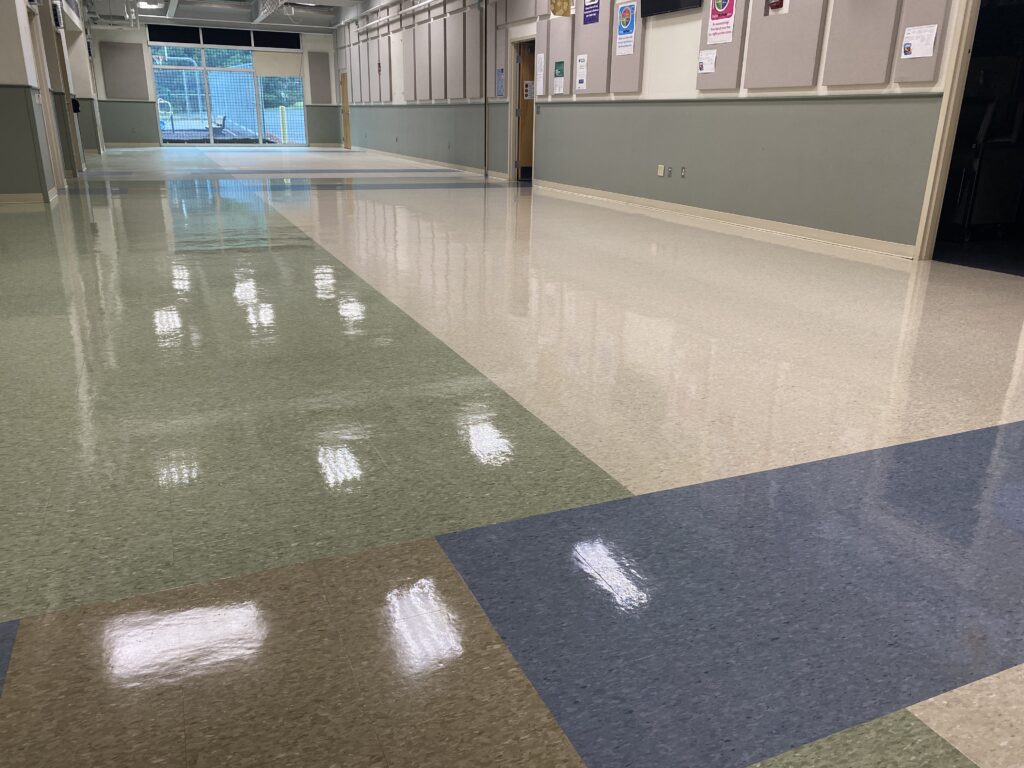
Waiting until floors appear heavily worn often leads to unnecessary stripping and downtime. Mechanical cleaning with the right floor machine helps preserve existing wax and extend the life of the finish.
Early intervention keeps traffic lanes from becoming permanent. It also allows facilities to maintain consistent appearance across the entire floor instead of reacting to visible damage after it has already occurred. When wax and applying new finish are timed correctly, floors remain easier to clean and more resistant to future wear.
Best Practice #3: Separate Daily Cleaning, Periodic Maintenance, and Restoration
A common challenge in high traffic environments is blending all floor care into one category. In reality, effective VCT floor care includes three distinct layers:
- Daily cleaning focuses on removing loose dirt and grime to reduce abrasion.
- Periodic maintenance addresses embedded soil and refreshes the protective finish.
- Restorative work corrects finish failure caused by deferred care or heavy wear.
When these roles are confused, facilities either over-strip floors or allow damage to accumulate. Clear separation ensures that cleaning supports long-term floor performance instead of shortening its lifespan.
How Often Should VCT Floors Be Cleaned and Waxed in High Traffic Areas?
VCT floors in high traffic areas should be cleaned daily to remove loose soil and reduce abrasion. Damp mopping or microfiber mopping helps control surface dirt, especially in entrances and corridors.
Mechanical scrubbing and recoating should be performed periodically based on traffic levels, soil load, and finish condition rather than on a fixed timeline. In most busy facilities, this occurs several times per year.
Stripping and waxing should only be done when the protective finish has worn beyond recovery. Floors that receive consistent daily and periodic maintenance often require full restoration far less frequently than those maintained with routine cleaning alone.
Warning Signs Your Current Cleaning Plan Isn’t Working
High traffic VCT floor cleaning plans often need adjustment when facilities notice:
- Persistent traffic lanes that return quickly after cleaning
- Uneven appearance between high-use and low-use areas
- Increased labor without improved results
- Finish breakdown that makes floors harder to clean
These signs usually indicate that surface cleaning is no longer enough to protect the floor system.
What “Best Practices” Look Like in Real Facilities
Successful high traffic VCT floor cleaning programs focus on prevention rather than reaction. Facilities that maintain consistent appearance and control long-term costs typically:
- Evaluate traffic patterns regularly
- Adjust cleaning frequency as usage changes
- Use professional equipment to clean beyond the surface
- Address wear early instead of waiting for visible damage
This approach reduces downtime, improves safety, and protects the investment in VCT flooring.
A Smarter Way to Protect High Traffic VCT Floors
High traffic VCT floor cleaning is most effective when it’s built around strategy instead of routine. Floors that receive the right care at the right time last longer, look better, and cost less to maintain over their lifespan.
If high traffic areas never seem to improve despite regular cleaning, it may be time to take a closer look at how your VCT floors are being maintained. We provide professional evaluations and customized maintenance plans designed for high traffic environments. Contact our team to discuss a cleaning strategy that protects your floors and extends their lifespan.