
Cleaning commercial tile floors requires more than routine daily maintenance, especially in high-traffic buildings where safety, appearance, and sanitation all depend on how well the flooring is cared for. Commercial tile is designed for durability, but it still loses its clarity and traction over time when soil builds up beneath regular janitorial routines. The gap between surface-level upkeep and the deeper care tile truly needs is often where problems begin.
This guide explains what building decision-makers should know about maintaining commercial tile floors so maintenance plans can be proactive, efficient, and aligned with the demands of busy facilities.
The Role Tile Floors Play in a Commercial Facility
Tile flooring performs well in demanding environments, but its long-term durability depends on how effectively it is maintained. Over time, residue affects slip resistance, traffic patterns create uneven wear, and grout absorbs soil and moisture that alter sanitation levels. These issues are not just cosmetic. They influence how tenants, customers, and employees perceive the building and can contribute to safety concerns if traction declines. Understanding how tile responds to real-world use helps support maintenance strategies that balance appearance, safety, and lifecycle cost.
Why Routine Janitorial Cleaning Is Not Enough
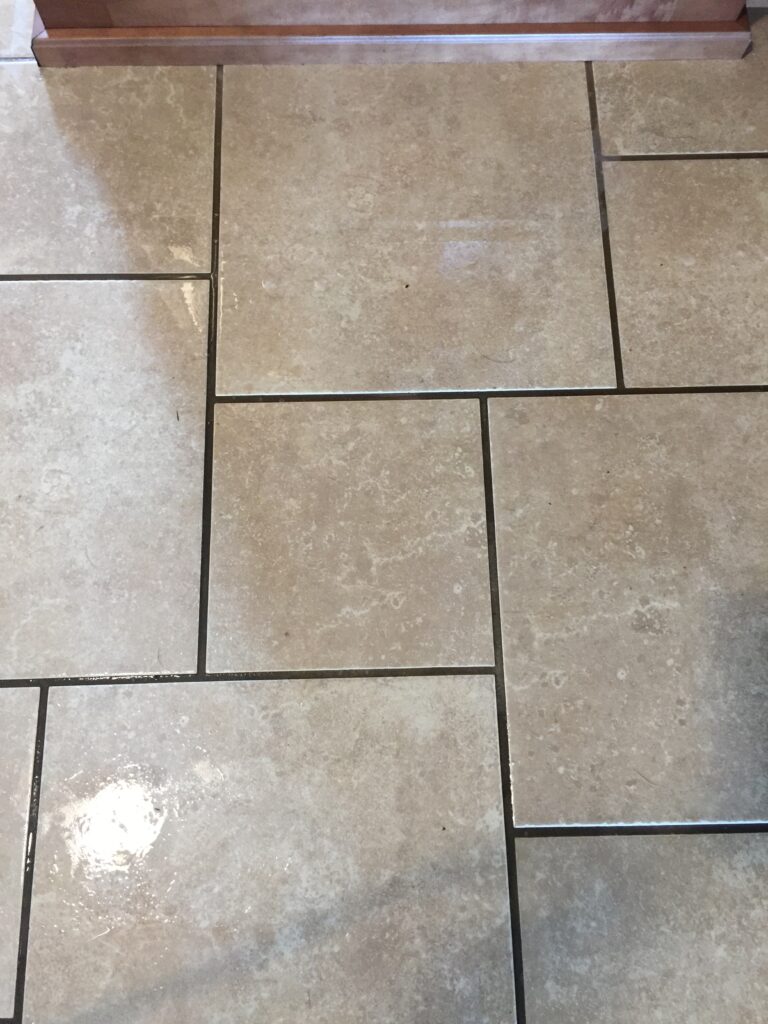
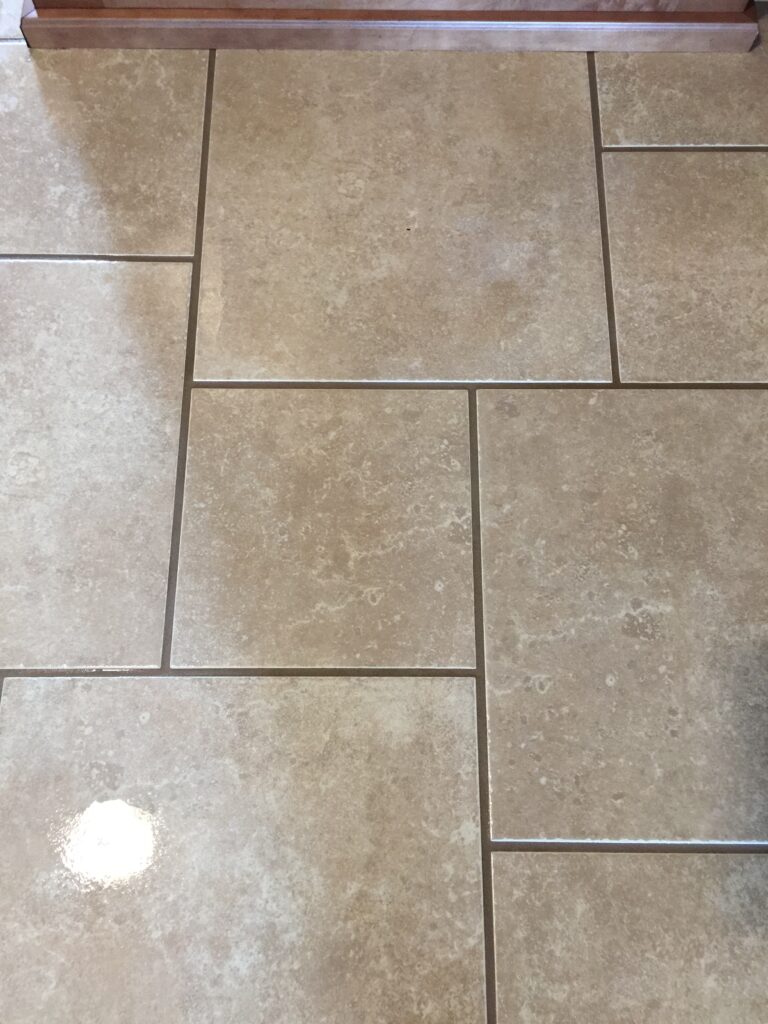
Daily sweeping and mopping support basic cleanliness, but they cannot remove the embedded soils and detergent films that accumulate in commercial settings. Even the most consistent routine can unintentionally drive contaminants deeper into grout lines or leave behind residues that dull the tile. This buildup gradually reduces traction and clarity. To fully restore the tile and grout, periodic deep cleaning is essential. Without it, surfaces may look acceptable at first glance while underlying soil continues to accumulate and cause longer-term issues.
Understanding Traffic Patterns
One of the most effective ways to improve a tile maintenance plan is to understand how people move through the building. Entrances, restrooms, break areas, and transitional corridors all experience different levels and types of soil exposure. A lobby may accumulate moisture and grit, while a warehouse corridor might collect industrial residue. Treating every area the same often leads to over-cleaning low-traffic sections and under-cleaning those that deteriorate fastest. Recognizing these patterns helps target deep cleaning where it has the greatest impact.
What a Deep Cleaning Process Should Actually Include
A deep cleaning process is essential when cleaning commercial tile floors because it reaches the embedded buildup that routine maintenance cannot remove.
A true deep cleaning should include:
1. Detergents matched to your soil load
Schools, offices, restaurants, healthcare facilities, and warehouses all require different chemistry.
2. Mechanical agitation
Rotary or oscillating scrubbers break down buildup that mops and auto scrubbers cannot dislodge.
3. Hot water or high-pressure rinsing
This step ensures suspended soil is removed from both the tile and grout instead of settling back into place.
4. Grout care specific to your material
Cementitious and epoxy grout behave differently and shouldn’t be treated with a one-size-fits-all approach.
5. Post-cleaning inspection
After cleaning, you should expect a check for traction, uniformity, and any areas needing additional passes.
With a structured and documented process, you can rely on predictable results that support both appearance and safety standards.
Determining How Often to Schedule Deep Cleaning
Deciding how often to deep clean your tile floors depends on your industry, traffic levels, tile composition, and environmental conditions. A moderate-traffic office might only need quarterly deep cleaning, while a high-traffic or regulated space may require monthly or bi-monthly service. Sealing, when appropriate, can further extend grout life and reduce how quickly soil accumulates. Establishing a predictable schedule allows you to budget effectively and avoid major disruptions caused by unexpected flooring problems.
Safety, Liability, and Compliance Considerations
Clean tile floors support both safety and compliance within a commercial facility. Residue buildup affects traction, increasing the risk of slip and fall incidents. Certain environments, including food service, healthcare, and education, have heightened sanitation expectations that require more rigorous care. When tile or grout deteriorate prematurely, capital planning is also affected. Understanding the connection between proper tile care and overall building safety helps decision-makers prioritize maintenance strategies that protect occupants and reduce long-term liability.
Evaluating a Commercial Tile Cleaning Provider
Choosing a provider involves more than selecting the lowest price. A reliable company will explain the cleaning chemistry they use, demonstrate experience in commercial environments, and offer scheduling that aligns with building operations. They should provide pre and post cleaning inspections, set realistic expectations, and recommend maintenance plans tailored specifically to the facility. This approach ensures better long-term performance than a one-size-fits-all service.
The Bottom Line on Commercial Tile Care
Tile floors play an important role in the overall function, appearance, and safety profile of a commercial facility. Understanding what goes into cleaning commercial tile floors, including traffic patterns, cleaning methods, scheduling, and provider evaluation, makes it easier to maintain safe and attractive surfaces and extend the lifespan of the flooring.
For businesses seeking a commercial tile care partner in Central PA, we offer structured deep cleaning processes, flexible scheduling, and maintenance plans designed for busy, high-traffic buildings. Contact us with any questions or to schedule a consultation.